Alright, now that I'm finally done with this...
Overall, I enjoyed this quest a fair bit, but I don't think it lived up to the hype. True, some of its flaws are products of an older engine, but I've played a few other 2.10 quests that managed to work around those better than this one did.
I'll start with something the engine had nothing to do with:
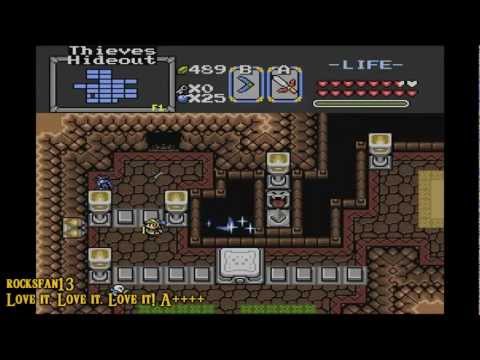
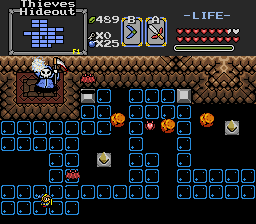
the dungeon design. As others before me have noted, Levels 1 and 4 were far too large and sprawling - I had to redo all of Level 4 after dying to the boss, and I ended up putting the quest down for months because it felt too monotonous even when I knew which way to go. (Level 2 was also a bit on the big side, but it was more enjoyable than those two on account of the size being more justified and put to better use.) Level 7 had the opposite problem: ironically, despite having the most intricate quirk, it felt the most linear. Throughout that dungeon, there was always only one way you could go to progress, and you only needed each new item in one place. (This was another one I had to do twice, but I breezed through it the second time, and it wasn't as bad.) Level 9 was also linear, but, given its nature, it fit much better than Level 7 in my opinion; similarly, Level 8, while large and branching (not to mention brutal at times), was much more fun than Levels 1 and 4 because it was more difficult to get lost in. On a more general note, none of the dungeon maps (subscreen or top bar) seemed accurate in terms of door locations, even accounting for secrets; I don't know whether that was intentional, but I wasn't a fan of it. (Final nitpick: those parts in various dungeons with the switches you need to step on before they sink? I've seen that kind of puzzle in a number of other older quests, but every one of them would be better without it, and this is no exception.)
Next up:
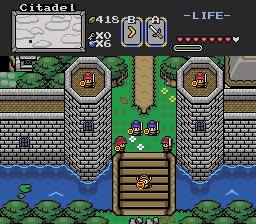
the overworld. Probably one of the best I've seen, and definitely the best aspect of the quest. The unused squares bother me a bit, but I understand why they're there. The sidequests were welcome inclusions.
As for
the music: I found the inclusion of some non-VG music (I noticed Dream On and Iris) a bit unorthodox, but a welcome idea... if only they fit where they played. Those two stuck out like sore thumbs to me in Level 1 and the end credits, respectively. I don't recall any other issues of this sort, though, and the rest of the music selection was alright. (I don't recognize the Hyrule Field tune, but it sounds like a pop song - if it is, it's a good example of the non-VG approach done right.)
The writing had so much more potential than what was used here. The plot, which I won't spoil, was great, but the dialogue was downright
cringeworthy, especially most of what came out of Link's mouth. I'd have given the quest a perfect score (so to speak) in this department were it not for the countless poor attempts at humor. Geico jokes and forced Hollywood references do not belong in Zelda games, fanmade or otherwise.
The gameplay and combat... Most of the custom bosses were cool, especially given the technical limitations, and the difficulty curve was much better than what I'm used to in ZC. That said, this is where the quest really shows its age.
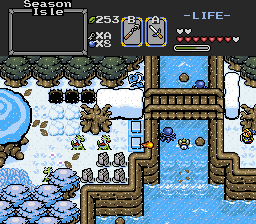
- First, grid-locked movement (as opposed to 8-directional) and the Flippers do not mix. Combining them effectively creates horizontal "walls" wherever water and solid ground meet along a vertical edge. This has gotten me killed, and it shouldn't happen.
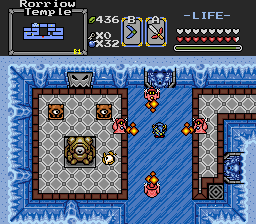
- Second, regular use of moving Mirrorrobes is a no-no. I can accept them once or twice as obstacles (as in Level 6), but they are not regular enemies and shouldn't be treated as such, especially - again - without 8-directional movement.
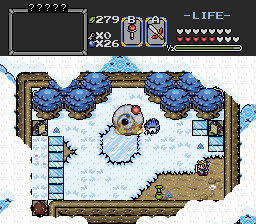
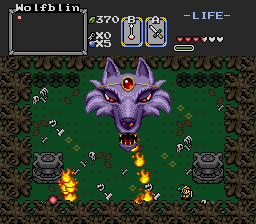
- Third, a few specific bosses were cheap. I considered the Spirit Rangers the most difficult, but the difficulty in that fight was genuine. If you died, it was (usually) your fault. This was not the case for King Dodongo or the final boss. King Dodongo will sometimes start inhaling and then stop in less time than it takes for a bomb to explode, which doesn't give you enough time to hide from the ensuing attack (which is usually lethal). The first few phases of the final boss fight include a flame wall attack that's usually unavoidable unless you know where you need to be before he appears and starts charging it (which isn't always the same place), and the second-last one includes a sword attack with zero warning as to where he's going to strike. (As an aside, bomb attacks don't fit him - couldn't he have used something energy-based instead?) When the only way to win a fight is to memorize exactly where and when attacks like these will start (or, in this case, use either a glitch or an optional item), that's bad design.
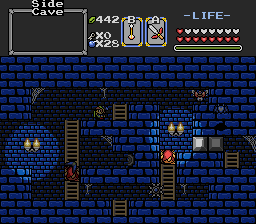
- Finally, the Cave of Ordeals suffers even more from the problem of "fake difficulty" than do either of the aforementioned bosses. Part of this is the fault of the lack of 8-directional movement (can you tell how much I value that?
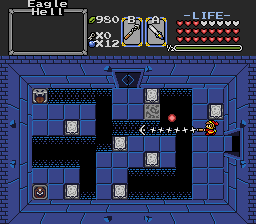
 ), but it's mostly because of the frequent appearance later on of Cracktoroks (which wouldn't be so bad but for the Fire Boomerang's trail hindering its ability to stun them), moving Mirrorrobes, and L3 Patras, sometimes on the same floor. Eagle Hell was... well, hellish (as it should be, being a bonus dungeon), but, like the Spirit Rangers, it was fair. There was always a way to win. 100 floors without checkpoints is too many for something like that.
Overall: worth playing, but not the best. Skip the Cave, even if (like me) you're into challenges.










 If you guys are interested here is the link: