Jump to content

Photo

Koh -Vs- Ocarina of Time


  • Please log in to reply
64 replies to this topic

#31 Moonbread

Moonbread

    Playing With Psychos

  • Members
  • Pronouns:They / Them

Posted 20 May 2013 - 09:26 AM

Let me show you something, Koh:


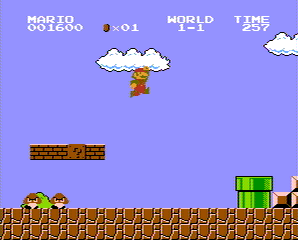
NES_Super_Mario_Bros.png to super-mario-bros-3-virtual-console-image


Mega_Man_-_NES_-_Cutman_Stage.png to Mega%20Man%206%20-%20Plant%20Man--articl


This is how game development works.  No one makes a console and knows how to push it to its limits or make it better right away.  They have to make games to figure out how a system works- it's not like how we make a game, because we have all the technology simplified and laid out in front of us.  This is a completely different ball-game.  It's natural for games to improve and evolve over time when the developers LEARN how to use the system!  Like I've tried to show you, the best examples are looking at early era NES games and late era NES games, past when the SNES came out.  Look at Mega Man 6, look at Kirby's Adventure, look at Super Mario Bros. 3.  SMB3 did so many groundbreaking things compared to SMB1, and within the NES's limits.  But Nintendo didn't know that they could pull this off until they had used the system so much after a few years.


  • The Satellite, Moosh, Jared and 1 other like this

#32 Koh

Koh

    Tamer Koh

  • Members
  • Real Name:Dominic
  • Location:Monsbaiya, Virginia

Posted 20 May 2013 - 09:41 AM


This is how game development works.  No one makes a console and knows how to push it to its limits or make it better right away.  They have to make games to figure out how a system works- it's not like how we make a game, because we have all the technology simplified and laid out in front of us.  This is a completely different ball-game.  It's natural for games to improve and evolve over time when the developers LEARN how to use the system!  Like I've tried to show you, the best examples are looking at early era NES games and late era NES games, past when the SNES came out.  Look at Mega Man 6, look at Kirby's Adventure, look at Super Mario Bros. 3.  SMB3 did so many groundbreaking things compared to SMB1, and within the NES's limits.  But Nintendo didn't know that they could pull this off until they had used the system so much after a few years.

Of course, because they worked with it for all of that time.  But it just goes to show how lacking the initial games actually were, which is what PrettyNier was saying about a game's quality being constant.  "Good for it's time" only goes to show how low quality actually was in that period, it doesn't help the game's case in one bit.  Our view of how good it is is what changes overtime, as new standards are met.  Today, it's unthinkable to make a game starring a character who dies in a single hit from everything, with no save system, a health bar, extra lives, or continues in some fashion.  But it was done to bits back in the day, and is now considered bad game design.  It was only "acceptable" then because that's all they knew, but that doesn't make a game "good for it's time."  It's still bad game design.


Edited by Koh, 20 May 2013 - 09:46 AM.


#33 Moonbread

Moonbread

    Playing With Psychos

  • Members
  • Pronouns:They / Them

Posted 20 May 2013 - 10:27 AM

Oh, did the entire world finally settle on what is called good and bad game design?  I must've missed it, because I thought people were allowed to have their own opinions.  Hence why I actually happen to like the style of gameplay you mentioned as 'bad' up there, and I know plenty of others who do, too.  People like different styles!  I don't like racing games and never really thought them as significant, but nicklegends loves F-Zero a lot, and you know what?  Good for him!  And even just as shown in this own series, I think Skyward Sword, Spirit Tracks, and Wind Waker are fantastic games, but a lot of people disagree. The majority of people think ALttP is fantastic, but people do disagree at times.  What's good and bad is all relative to one's own eyes, but it sort of looks like you want to believe that everyone should have the same opinion, which would make the gaming world incredibly boring.  Which leads into the real point.


You care too much about the mechanics of a game from 15 years ago.


Who cares if it doesn't meet up to the standards of today?  It was a great game for what it was back then, and those who played it back then will most likely still have the same appreciation.  Sure, standards change.  Opinions change.  But it's not wrong to enjoy a game from your childhood despite how it gets compared to modern games or as things evolve (not to mention, very often there are things wrong with modern games that weren't wrong with older games).  There's some things wrong with the original Zelda that I can recognize, but I won't really ever think that when I sit down to play it, because to dismantle my high opinion of it would be the equivalent of destroying my own childhood- it was a game I was in love with since I was 3 years old.  20 years later, I still love it to death no matter what.  And for a lot of people, Ocarina of Time was their first entry into this series, so of course they view it in the same respect- even if there's things wrong with it, which at this point I think is very little, it's not going to change that for them.  Nostalgia is *not* a bad thing at all!  It helps us hold onto those childhood gems instead of trashing them later on in life.  And that's infinitely more precious than being able to rip apart a game.


The crux of my argument?  There's more to video games than critiquing these fine points about them.  There's literally *nothing* you can do about it now, unless you have a time machine, and if so, go stop some evil dictators instead.  Video games are supposed to be fun, they're supposed to be something for people to sit down and enjoy and bond over.  I find that critiquing games puts the cracks in a relationship, as opposed to just sitting down and enjoying the fact that the two of you are playing a video game together or watching the other person play.  Next time you play a video game, Koh, ignore these little critiques in your head, or at least tell yourself they're not important!  Even if it's not the best thing since sliced bread, just sit down and play it for fun.  Ignore the little things, ignore that it wasn't quite difficult enough or that it wasn't colorful enough for you.  You're not being ignorant by ignoring flaws, you're merely just looking past them and realizing that they don't matter if you're having a good time.  If you critiqued people this much, you wouldn't have a single friend in the world.


And one last thing, to me, "Good for its time" means that if you grew up with it, it will always be a good game in your heart.  As cheesy as that is.  And you will never have that same satisfaction as a lot of the rest of us have from playing Ocarina of Time when we were young and it first came out.  "Good for its time" doesn't translate directly into "It would suck now".  It just means things were different back then.  Different isn't a dirty word.


  • The Satellite and Shane like this

#34 Koh

Koh

    Tamer Koh

  • Members
  • Real Name:Dominic
  • Location:Monsbaiya, Virginia

Posted 20 May 2013 - 10:42 AM

But the thing is, there existed games in those periods that are "timeless," in that even with today's standards, the games would still be amazing.  Take Seiken Densetsu 3 for example.  It could still pass off as an amazing game that isn't suffering from the sands of time.  You've got many diverse characters, all given attention, plenty of stories, lots of exploration in a beautiful world, etc.  And!  It happened to be on the SNES.  If you play something of that calibur on the SNES, obviously you'd expect the next generation console (N64) to be even better in those regards, but of course not.


Look, I'm not saying people can't have their opinions, and I'm not even trying to change them.  I gave mine, people gave theirs, and then we got into what makes a game raped by time.  Mechanics aren't everything, but they definitely help in immersion and playability, which is why it's always the top thing I look out for in the list.  The gameplay is also right up there next to it, because if the game isn't fun or interesting to play, there's no purpose in playing it at all.  I enjoyed Ocarina of Time, but it's flaws kept me from being immersed with the game world and bonding with the characters.


Edited by Koh, 20 May 2013 - 10:43 AM.


#35 DCEnygma

DCEnygma

    you're going to have a bad time

  • Members
  • Real Name:Justin
  • Location:Indianaland

Posted 20 May 2013 - 11:37 AM

But the thing is, there existed games in those periods that are "timeless," in that even with today's standards, the games would still be amazing.  Take Seiken Densetsu 3 for example.  It could still pass off as an amazing game that isn't suffering from the sands of time.  You've got many diverse characters, all given attention, plenty of stories, lots of exploration in a beautiful world, etc.  And!  It happened to be on the SNES.  If you play something of that calibur on the SNES, obviously you'd expect the next generation console (N64) to be even better in those regards, but of course not.


Look, I'm not saying people can't have their opinions, and I'm not even trying to change them.  I gave mine, people gave theirs, and then we got into what makes a game raped by time.  Mechanics aren't everything, but they definitely help in immersion and playability, which is why it's always the top thing I look out for in the list.  The gameplay is also right up there next to it, because if the game isn't fun or interesting to play, there's no purpose in playing it at all.  I enjoyed Ocarina of Time, but it's flaws kept me from being immersed with the game world and bonding with the characters.


Yes, but to your own point, you didn't play it when it came out and was new, so you're not looking at it the same way you would've back then. You're instead comparing it on a scale that simply didn't exist back then, so are not able to see the same timelessness you yourself have described. It's similar to people who are just experiencing video games in this area playing the original Legend of Zelda. It will come across as clunky and stiff, especially compared to every single one after it.


#36 Koh

Koh

    Tamer Koh

  • Members
  • Real Name:Dominic
  • Location:Monsbaiya, Virginia

Posted 20 May 2013 - 11:43 AM

Yes, but to your own point, you didn't play it when it came out and was new, so you're not looking at it the same way you would've back then. You're instead comparing it on a scale that simply didn't exist back then, so are not able to see the same timelessness you yourself have described. It's similar to people who are just experiencing video games in this area playing the original Legend of Zelda. It will come across as clunky and stiff, especially compared to every single one after it.

And that's exactly why "good for its time" really only dogs the era and the game itself, because the game is done and as is.  Nothing will change how clunky and stiff it is, which is why it isn't timeless.


Oh and I forgot to mention, the "one-hit character with no saving, continues, lives, or anything else" is bad game design as a whole, not per individual.  Why is it bad game design?  Because it's based on accurate precision where you can only progress in the game if you play the SHIT out of the same parts of the game, OVER AND OVER AND OVER AND OVER AND OVER again, and also has no room for human error, which WILL happen.  And when it does happen, you have to start ALL THE WAY OVER from the beginning of the game, since there was no save system or continues.  Henceforth, bad game design.  Challenging?  Yes.  Feasible?  Absolutely not, especially for those games that, even when played perfectly, takes hours upon hours to beat.


Edited by Koh, 20 May 2013 - 11:46 AM.


#37 Nicholas Steel

Nicholas Steel

    Hero of Time

  • Members
  • Location:Australia

Posted 20 May 2013 - 12:45 PM

There weren't many good NES games that did that though iirc. most of the good ones give you life bars. With regards to the memory expansion pack, it really wasn't needed, you saw what Rare pulled off with Conker's Bad Fur Day? Shit is amazing yo! and no need for the expansion pack. I don't think even Nintendo bothered to optimize their products anywhere near as much as Rare did.


Edited by franpa, 20 May 2013 - 12:46 PM.

  • Ventus likes this

#38 Moonbread

Moonbread

    Playing With Psychos

  • Members
  • Pronouns:They / Them

Posted 20 May 2013 - 02:03 PM


And that's exactly why "good for its time" really only dogs the era and the game itself, because the game is done and as is.  Nothing will change how clunky and stiff it is, which is why it isn't timeless.


Oh and I forgot to mention, the "one-hit character with no saving, continues, lives, or anything else" is bad game design as a whole, not per individual.  Why is it bad game design?  Because it's based on accurate precision where you can only progress in the game if you play the SHIT out of the same parts of the game, OVER AND OVER AND OVER AND OVER AND OVER again, and also has no room for human error, which WILL happen.  And when it does happen, you have to start ALL THE WAY OVER from the beginning of the game, since there was no save system or continues.  Henceforth, bad game design.  Challenging?  Yes.  Feasible?  Absolutely not, especially for those games that, even when played perfectly, takes hours upon hours to beat.

Nothing changes with that argument, Koh- some people still like that kind of gameplay.  Once again, the definition of 'bad' is still subjective.  The reason I like it is because I feel like my skills are evolving and I feel more accomplished when I can do it.  I can almost do Turbo Tunnel in Battletoads with no problems!  And it feels great.  Even if Turbo Tunnel can be ridiculously unfair, it's a thrill when you have lightning reflexes through it.  And I don't have it memorized, I just learned how to react quicker to what's ahead.  Ninja Gaiden and Ghosts n Goblins are both infamously difficult and unforgiving but I still find both of them to be very fun games!  Certain games work certain ways.  I wouldn't want all games to have to follow a set of the same rules.


You can't give actual facts on what's good and what's bad for the sake of what people find enjoyable.  People will always have their own preferences, regardless.


Also, on the topic of Seiken Densetsu 3?  It was made a good while after the SNES was out, so like I said before, they had time to learn the system and what it was capable of.  The N64 was a brand new jump into a different era, because it was no longer about making the next Super Mario World or A Link to the Past, they had to move on to a completely new style of making games.  Also, SD3 is an RPG- it's more about the story and characters.  Zelda is an action/adventure game, more focused on dungeon crawling, combat, and puzzles.  Story has never been a big focus on the series, at least until Wind Waker.  They had their priorities in set, and seriously, look at the amount of work that went into it just in the 3 years they worked on it (seriously, look how awful it looked in 1995.  They had a waaaaaaaaays to go from there).  Not every NPC has to be this amazingly complex individual if it does nothing for the game.  Would Super Mario Bros have benefited more from the Toads at the end of the castles in Worlds 1 through 7 being complex people?  No, because they're just there to provide a means to the end of each world.  There's no point in detailing up things that won't make a difference, if you can put more focus toward the things that do matter to the game.  Ocarina of Time has great dungeons, and I prefer that over complex NPCs.


And again, my entire argument on 'discovering the limits of a console' still stands entirely.


Also also, on a side note, please don't use the term 'rape' as a metaphor for a situation that isn't rape.  It's annoying.


#39 Koh

Koh

    Tamer Koh

  • Members
  • Real Name:Dominic
  • Location:Monsbaiya, Virginia

Posted 20 May 2013 - 02:33 PM

Scoots Post

The difference here, however, is that Mario wasn't a game that involved interacting with characters.  Even if it's not an RPG, if you're going to put an emphasis on talking to NPCs by making a whole spiel about it (camera angles, a whole textbox system with varying NPC dialogue, etc.) make it MEANINGFUL.  Otherwise, it ends up being exactly like Castlevania 2:  Simon's Quest, where you just go around and totally ignore any and every NPC except the shop keepers.  If that's what ends up happening, they have no purpose in being there except for being "town detail" which is a copout, and the game might as well have been setup like Zelda 1, where there are no random NPCs that don't do anything except shopkeep, gameplay, or hint-give.  They can be "town detail" while still feeling like actual people, and I'm more than happy to prove that with my game.


Edited by Koh, 20 May 2013 - 02:34 PM.


#40 klop422

klop422

    Guess I'm full of monsters and treasure

  • Members
  • Real Name:Not George
  • Location:Planet Earth

Posted 20 May 2013 - 05:57 PM

Just saying. The argument about early games being pretty bad isn't exactly true. At least in my opinion, Super Mario 64 was really detailed, the npcs were actually quite interesting (thought they were all toads), and the action was actually quite good! And bear in mind that SM64 was released with the Nintendo 64. I'm not rejecting that later games are better, but early games can still be good.

Also, Hyrule Field had the big poes.


#41 strike

strike

    life is fragile, temporary, and precious

  • Members
  • Real Name:Olórin

Posted 20 May 2013 - 07:01 PM

The difference here, however, is that Mario wasn't a game that involved interacting with characters. Even if it's not an RPG, if you're going to put an emphasis on talking to NPCs by making a whole spiel about it (camera angles, a whole textbox system with varying NPC dialogue, etc.) make it MEANINGFUL. Otherwise, it ends up being exactly like Castlevania 2: Simon's Quest, where you just go around and totally ignore any and every NPC except the shop keepers. If that's what ends up happening, they have no purpose in being there except for being "town detail" which is a copout, and the game might as well have been setup like Zelda 1, where there are no random NPCs that don't do anything except shopkeep, gameplay, or hint-give. They can be "town detail" while still feeling like actual people, and I'm more than happy to prove that with my game.

Sorry, I don't know how to quote on the new site...

In response to your quote, well obviously it didn't end up like Castlevamia 2: Simon's Quest because the characters were no where NEAR that one dimensional. Lots of the characters have a lot of depth if you actually spend the time to get to know them- which apparently you didn't considering you only paid attention to the burly shopkeepers who, admittedly, don't exhibit much character development.

You claim the characters have very little depth but did you actually pay them any attention? Many characters have very unique and interesting personalities and little tidbits of information that they can bestow upon you if you listen. The Lonely Skull Kid, The Dying Soldier, the old man at Kakariko village, the little boy at the graves, the floating carpet guy, and TONS of other characters.

And even if you don't agree with their individual character types it's hard to deny how much they help the game world. To this day there are still very active forums debating aspects of characters from Oot or trying to find a new way they affect the plot. There are many wacky characters whose purpose is only to show you that you aren't in the world you usually inhabit- the flying beans salesman, the frog choir, the Zora king, the giant Goron, the dead composers, all add depth and immerse you in the experience.

You seem to wave off nearly every character in Oot for being one dimensional but did you actually pay attention?

-Strike

#42 Koh

Koh

    Tamer Koh

  • Members
  • Real Name:Dominic
  • Location:Monsbaiya, Virginia

Posted 20 May 2013 - 07:31 PM

The difference here, however, is that Mario wasn't a game that involved interacting with characters. Even if it's not an RPG, if you're going to put an emphasis on talking to NPCs by making a whole spiel about it (camera angles, a whole textbox system with varying NPC dialogue, etc.) make it MEANINGFUL. Otherwise, it ends up being exactly like Castlevania 2: Simon's Quest, where you just go around and totally ignore any and every NPC except the shop keepers. If that's what ends up happening, they have no purpose in being there except for being "town detail" which is a copout, and the game might as well have been setup like Zelda 1, where there are no random NPCs that don't do anything except shopkeep, gameplay, or hint-give. They can be "town detail" while still feeling like actual people, and I'm more than happy to prove that with my game.

Sorry, I don't know how to quote on the new site...

In response to your quote, well obviously it didn't end up like Castlevamia 2: Simon's Quest because the characters were no where NEAR that one dimensional. Lots of the characters have a lot of depth if you actually spend the time to get to know them- which apparently you didn't considering you only paid attention to the burly shopkeepers who, admittedly, don't exhibit much character development.

You claim the characters have very little depth but did you actually pay them any attention? Many characters have very unique and interesting personalities and little tidbits of information that they can bestow upon you if you listen. The Lonely Skull Kid, The Dying Soldier, the old man at Kakariko village, the little boy at the graves, the floating carpet guy, and TONS of other characters.

And even if you don't agree with their individual character types it's hard to deny how much they help the game world. To this day there are still very active forums debating aspects of characters from Oot or trying to find a new way they affect the plot. There are many wacky characters whose purpose is only to show you that you aren't in the world you usually inhabit- the flying beans salesman, the frog choir, the Zora king, the giant Goron, the dead composers, all add depth and immerse you in the experience.

You seem to wave off nearly every character in Oot for being one dimensional but did you actually pay attention?

-Strike

But they had no pursuit, which is my point.  Why not give a little side story to them where you could sort of ease their pain or learn more about why they are they way they are?  But of course not, it's just a one time deal to set the mood of that one scene.


#43 strike

strike

    life is fragile, temporary, and precious

  • Members
  • Real Name:Olórin

Posted 20 May 2013 - 07:46 PM

But if they had some plot going along with them with some side quest wouldn't they kind of become main characters? And aren't you only criticizing the side characters? Because there are main characters who do EXACTLY what you are describing- The cursed spider people. Or perhaps you think there should be no side characters and have a story over saturated with 50 million characters competing for the characters attention.

And what if they only serve as a one time gig to set the mood of a scene? They accomplish their purpose and drive the plot and mood. What's wrong with that????

-Strike

#44 Koh

Koh

    Tamer Koh

  • Members
  • Real Name:Dominic
  • Location:Monsbaiya, Virginia

Posted 20 May 2013 - 08:41 PM

But if they had some plot going along with them with some side quest wouldn't they kind of become main characters? And aren't you only criticizing the side characters? Because there are main characters who do EXACTLY what you are describing- The cursed spider people. Or perhaps you think there should be no side characters and have a story over saturated with 50 million characters competing for the characters attention.

And what if they only serve as a one time gig to set the mood of a scene? They accomplish their purpose and drive the plot and mood. What's wrong with that????

-Strike

This isn't true.  They won't become main characters just because you give them a side story.  The only characters considered main characters are those that must be interacted with/used to progress the primary plot of the game.  Having side stories that are completely optional do not fall into that category, however, it DOES flesh the characters involved out more and allow you to bond with them, which again was my point.  There's going to be plenty of optional side stories in my game, so you can learn more about the people in the world and stry to be a good samaritan if you wish, or if you simply want to build a relationship with the characters around the world.  The only required characters are those that revolve around the primary plot of the game.


Edited by Koh, 20 May 2013 - 08:49 PM.


#45 UZF

UZF

    Junior

  • Members

Posted 20 May 2013 - 09:21 PM

This topic is literally going nowhere. Everyone has their own  opinions. Koh has good points and so does everyone else.

Everyone is entitled their own opinion. 

Here is my opinion. Ocarina of Time was a great game. 

Now shut up, and move on.


0 user(s) are reading this topic

0 members, 0 guests, 0 anonymous users